Monday, February 23, 2015

When the clock is ticking

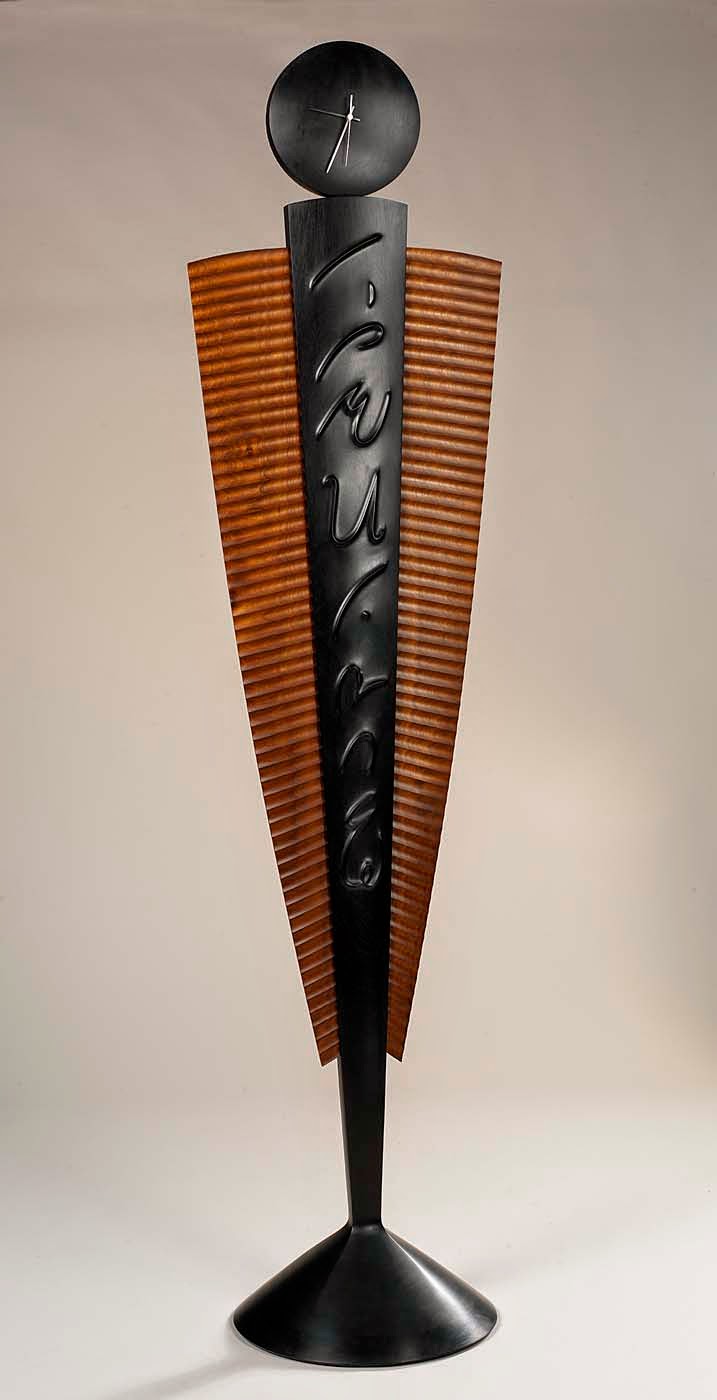
"Time Totem" by Peter Pierobon


I am reading a wonderful book for my book club, The Lost Child of Philomena Lee. You may recall the story from the movie Philomena starring Judi Dench that was up for four Oscars just last year. Thought it does not have Dame Judi's stellar performance to keep you glued to its pages, the book is every bit as interesting as the movie. Maybe even more so, since it gives us more detail about the life of Philomena's lost child Anthony, rechristened Mike Hess by his American parents. Martin Sixsmith, the journalist who uncovered this gripping story and retells it like a good detective novel, drops in a few moments of comic relief when he can. I laughed out loud the other day when I read this sentence, describing the 1979 American Bar Association Christmas party in Washington, D.C. : "At around ten o'clock the MC tapped a glass and called for silence. The speeches were the usual mix of pomposity and bad jokes and Mike noticed a few people looking at their watches long before. . . the closing remarks." Chuckle, chuckle, cringe. I have been to events like that. And I am sure you have, too.

But it doesn't have to be that way! Just because this has become "the usual," as Sixsmith says, doesn't mean it is the only way to handle special occasion speeches. Celebrations, holiday parties, awards ceremonies, business social events of all types call for a "few words" given by senior staff and honorees. But so many times those people kill their own credibility, or reduce their own stature by trying to be something they are not - entertainers! When you get a platform, as on a festive occasion, the rule of thumb is short, sweet, and to the point. You can use the opportunity to make a point, of course (because every speech needs to be about something) but plan ahead and say it in a few well-chosen words for maximum impact. Don't hold your audience hostage just because you are having a "starring" moment.

People who actually are stars know the importance of preparation--partly because they know their speeches will be filmed, replayed and scrutinized, and partly because they know they will be "played offstage" if they drone on too long.  Last night's Oscars ceremony gave us a surprising number of speeches that made an impact and stayed within the allotted time limit! My favorite performer this year, Patricia Arquette, rallied the troops with her cry for women's equality, and Graham Moore encouraged those who feel like outsiders by pointing out that difference can lead to great achievement.  John Legend used his acceptance speech to powerfully call out pervasive racism that lingers decades after Selma. In fact, most of Hollywood's finest seemed to have gotten the message last night and actually prepared their remarks beforehand. That is something I always urge clients to do, so I was quite pleased.

I rarely hold up Hollywood as an example of How To Do It Right in Real Life, but Oscar 2015 gave us many strong examples of classy people delivering powerful messages. And it's always fun to see The Beautiful People being . .  . well, beautiful!

Friday, January 23, 2015

Trans-parent language

Lately I have been watching and enjoying the Amazon television series Transparent. I was thrilled when it won the Golden Globes for Best TV series as Best Actor in a comedy. And now everyone will have have a chance to watch it when Amazon streams the entire season for free on January 24th.

 Much has been written about this ground-breaking series since it debuted in the fall. I really do love Jeffrey Tambor's lovingly humorous portrayal of Maura, the transgender parent of the title. He is an actor that I have become familiar with over the years. He has triumphed in countless roles before; he outdoes himself here. And series creator Jill Soloway is acting as a positive disruptive force in the world of formulaic, often sexist Hollywood sitcoms.

So watch it if you like comedy, if you like good acting with smart dialogue, and if you like gorgeous California real estate. If you are squeamish about sex scenes or gender-questioning, this isn't the series for you. But you probably already guessed that!

I also really appreciate how the series, and the growing visibility of the transgender community that it reflects, demands that we examine the powerful role language plays. Maura's family has many questions, but they are summed up by his daughter Ali, who simply asks, "What do we call him now?" The name she settles on, "Moppa," is a lovely compromise, one that Soloway used with her own trans-parent. But personal pronouns remain problematic, and cause some confusion, notably in Episode 5.

I welcome this examination of the power of these words. For too long, many of us protested the offensiveness of using "men" or "mankind" for "people" and "humankind." And were told "oh, you know what I mean." Unfortunately, we did. But refusing to acknowledge the power imbalance implicit in this terminology seems laughable to most of us today. Pick up an old textbook or newspaper, though, and that language propels you right back to the days of the unapologetic patriarchy. So I understand the importance of getting this right. Identity is tied up in how we label ourselves, and how the world labels us. If transgender people, or those who identify as genderqueer want to be referred to as ze, why should we fight it? Nouns and pronouns influence how we see ourselves in relation to society.  I grudgingly admit that the growing use of "they" might just solve this problem, though it is extremely hard for my grammar-loving heart to embrace this term. But logic (and the very clever columnist Steven Petrow) convinces me I may have to.

Who knows? If we keep going down this path, someday I may realize one of my wildest dreams, when once and for all we bury the boorish  "you guys" in favor of the simple, elegant "you."

Monday, January 5, 2015

New Year's Day with NPH

Neil Patrick Harris
Happy New Year!
If you want to read yet another blog about New Year's resolutions or predictions for what 2015 has in store for us, I apologize. This is not that blog. You are welcome to look at what I have written about resolutions in the past. I also have an astrologer friend who makes some interesting predictions based on what the sky tells us is happening now and in the coming months.

No, this first column of the New Year will highlight a wonderful episode of NPR's Fresh Air I heard on New Year's Day. The incomparable Terry Gross rebroadcast an interview with actor/singer/author Neil Patrick Harris from October 13,  2014. Somehow I missed its original air date but am glad I caught it this time around!

Harris is an incredibly wise and grounded (not to mention talented) performer, and he gave a warm and funny interview: I recommend it to you. In conversation with him, Gross covered many intriguing topics. NPH (as he is known to his fans) has had an interesting career as an actor, recently playing a trans-gendered German rock singer in Hedwig and the Angry Inch on Broadway. It was a challenging role, to say the least, and he won a Tony Award for it in 2014. Gross asked him about his approach, specifically about how he transformed physically and vocally into the female rock-singing persona. I was fascinated by what he said about his vocal routine, and his work with veteran New York voice coach Liz Caplan. She engaged him in detailed work on breathing and posture habits affecting his vocal production, just as I do with my clients. And, like most of the people I work with, NPH had a few things to learn: "As it turns out, the way I carry my personal body is a little neck strained... meaning that I don't stand perfectly tall, I jut my neck forward a little bit. And instead of using my diaphragm and my full breath, I tend to sort of clench my breath right around my throat and allow the sounds to come through... that compression is not so good on your cords because  ... [it] causes some kind of vocal problems later, like nodes or losing your voice". Caplan also gave him exercises for tongue tension, which can add to that vocal stress. Gross, apparently as fascinated by his technique as I was, asked NPH to demonstrate several exercises. They weren't exactly the ones I use, but I would guess any clients of mine who happened to catch the show recognized the similarities.

It was a rewarding episode for me to hear. To know that I teach a technique that works (even for such pros as NPH!), that I continue to share with others who can really be helped by it: what a wonderful way to start the New Year!

Wednesday, December 3, 2014

Short and sweet

Last Friday I began my holiday baking (first up...rugelach!) while enjoying the annual broadcast of the Ig Nobel Prize Awards on NPR's Science Friday. These two activities signal to me the beginning of the Christmas season! The Igs (as they are known to their aficionados) are given every year by the Annals of Improbable Research, a magazine whose stated goal is to publish "research that makes people LAUGH then THINK." I always learn fun new facts, and get a few good laughs out of Black Friday's hour-long reprise. Last year I blogged about the ceremony's ingenious use of a young girl by the name of Miss Sweetie Poo who calls the speakers out when they wander "in the weeds."

This year I was struck by another element of the Igs that we could do well to incorporate into our thinking--their 24/7 Lectures. When we prepare speeches, comments, or meeting recaps for any kind of presentation, we could benefit from remembering the rules: "Each 24/7 Lecturer explains their topic twice: First, a complete, technical description in 24 seconds. Then, a clear summary that anyone can understand in 7 words" (italics mine).

It sure would take a bit of doing, but what if we set that goal for ourselves? What if we could boil down our main talking points to a succinct 24-second explanation? And then, provide a short, clear summary? I am sure such a thought exercise would clarify our thinking, maybe even direct us to what we can cut out of our presentations that is unnecessary or obfuscatory.

Succinct messaging takes time; well worth it.
7 words!

Tuesday, November 25, 2014

Giving thanks for NaNoWriMo

As Thanksgiving week rolls around I am thinking of the many things I am thankful for this year. Many are the wonderful people I have in my life and experiences I share with them. But there is also something new: this year, for the first time, I am participating in NaNoWriMo and am very thankful to Chris Baty for starting National Novel Writing Month in 1999. It grew from 21 friends who thought being novelists would help them get dates to a non-profit that last year propelled 310,095 writers world-wide to create novels. Of  50,000 words. In a month. Since I am a playwright, my "novel" uses fewer lengthy descriptions, so 50,000 seems like a lot. But I will edit out all the superfluous bits when I am done and hopefully something will take shape!

I have written plays before, but most of them had built-in deadlines. This one has been waiting months - no, years - to be written. And I just could not get it started. Until NaNo. Once you commit to doing the month of writing, you can get online support in the form of pep talks from successful authors, writing prompts, online writing sprints, and most of all, a sense of community. My region, Northern Virginia, has 8,174 members, many of whom have met up at coffee shops and libraries to write, bond and offer encouragement.

Writing is, by nature, a very solitary pursuit. It has been a great comfort this month to see so many fellow Nanites writing on the Forums or on the regional Facebook page about their own frustration at staring at the blank computer screen, or feeling they have run out of things to say, or knowing - absolutely- that everything they have written is rubbish! And to see others rallying round with words of encouragement. "Just keep writing," they say, "Edit later. Get it all out." Of course having a huge number of words to write every single day means that you can't do much editing or self-censoring as you go along. I have found that very liberating!

Support and accountability are things we all need. Creative artists who toil at their computers and live in their imaginations often don't much of either. Sometimes you just need a teensy bit of incentive to get it all out and put it all down. Later you will revise and revise and revise, and share those versions with your writing circle for them to critique. But first you need something to revise!

I have about 6,000 words to go and know I will finish. Might do it next year, as well. Think about joining me. We could be writing buddies! What's the worst thing that can happen? You write 50,000 words; some of then have to be good!

Tuesday, November 11, 2014

What's cookin'?

"Why do I need a coach to learn how to speak in public? I have been talking almost my whole life." To answer this question I often use a cooking analogy: Early in life you learn what sounds to make, and later what words to use to get what you need. Survival communications. Some people never need to learn more. But if you find yourself pursuing a career where "excellent oral communications" are required, or just want to make yourself heard above life's everyday static, you will need to work harder at it. That's where expert advice comes in, whether it is reading books or articles, watching webinars, or working with a communications coach. Each level of learning brings you closer to development of your own solid speaking technique.

So with cooking. Most of us learn survival cooking skills fairly early in life: scrambled eggs, mac 'n cheese, pb & j. But at some point we need to step up our game--to impress someone, to rescue ourselves from boredom, to cut down on take-out and restaurant costs. And so we read a cookbook and watch some cooking shows. Those of us who really want or need to excel study with the experts.

Every Saturday one of my delights is listening to The Splendid Table, a radio show from American Public Media, hosted by cooking expert and food journalist Lynne Rosetto Kasper. Lynne has a great way of making absolutely every dish she describes on the show sound mouth-wateringly delicious. And "doable." When she broadcasts interviews with guests, she has them break down complicated recipes and explain the culinary process, demystifying cuisine that might seem complicated. Even an elaborate Tourbot soufleé . She also gives a lot of really solid cooking advice to listeners who call in.

Saturday before last a caller said he wanted to become a better cook. He had trouble following recipes, and wanted some hints on other ways to improve. Lynne urged him to step away from the individual recipes, and really understand the underlying technique used in creating the dish. "Don't learn recipes, learn technique," she said. "You are more in control when you know the how and the why of what you are doing."

Back to my analogy: I work with clients to discover techniques that work for each of them. While these are similar, they vary from person to person. Much as cooking will vary according to pans used, oven temperature, quality of ingredients, etc. But when you break everything down and come to an understanding of how things work, you are able to develop a solid technique. Which you can then apply to many different situations. For example, once you have mastered a basic bechamel sauce, you can make dozens of French and Italian sauces. Once you know how to embody and embrace your own authentic presence, you have the ability to speak successfully anywhere, any time!

And doesn't that sound delicious?

Friday, November 7, 2014

Patterns. They are all around us. They are a big part of our everyday lives, as organizing principles, and as signposts to tell us where we fit in. We need to feel part of these patterns. To place ourselves in the now of the framework of our lives and the lives of those around us.

But this is a paradox, because when we are inside the pattern, we cannot see where we are. That is why walking through a maze for the first time can be so destabilizing and disorienting. You may end up down a blind alley or at a dead end.  You have to turn around, retrace your steps, go back to where you started--IF you can locate it. Little wonder, then, that books and movies use mazes to symbolize terrifying journeys into the unknown! I think "maze" and see Jack Nicholson in The Shining chasing Shelley Duvall and Danny Lloyd in the snow. Or I vividly relive the tragedy awaiting Cedric Diggory and Harry Potter inside the Tri-Wizard Tournament Maze in Harry Potter and the Goblet of Fire.

Every time we get up to speak, we find ourselves in that maze--experiencing the journey, telling our story, turning here and there and following the path to its logical conclusion. BUT we also need to be outside the maze, keeping the larger picture in mind so we can see the pattern. We must know what our endpoint is and how to get there. We have to be sure not to get lost by taking a wrong turn, going down a rhetorical dead end, or ending up somewhere other than where we planned to be, with no idea of how to get back.

Of course when we practice before we speak, we become familiar with the best way to navigate the maze. And we become comfortable ignoring those little nagging voices that urge us to "step off the trail, go this way, it will be a shortcut, what can it hurt?"

But even before we step behind the podium or sit up straight in our conference room chair, even before the practice session begins, we need to keep the pattern in mind. We need to use it as a structural element when developing our thesis and main supporting points. Sometimes we are tempted to go into great detail to tease out an intriguing but non-essential subpoint. Or we tell an entertaining but digressive story. That sort of detour from the speech's overall plan does nothing to further our argument, and can be quite confusing to our audience. So we need to stay on the path in order to reach our goal.

Patterns can be comforting, if you follow the signposts and clues and don't get lost. And mazes can be mastered--with practice and a clear head!

photo credit: odolphie via photopin cc